

Cities and regions are the driving force behind these missions, and for that reason, the meeting also included opportunities to share projects, experiences, and progress regarding climate change mitigation and adaptation.
Below, you can learn about the initiatives presented by five cities during the Operación citiES 2030 event. As part of the event, the five cities presented projects carried out in their municipalities, and the audience was able to rate each project through a live vote.
Arroyuelo Street Project in Chiclana de la Frontera [Watch live stream]
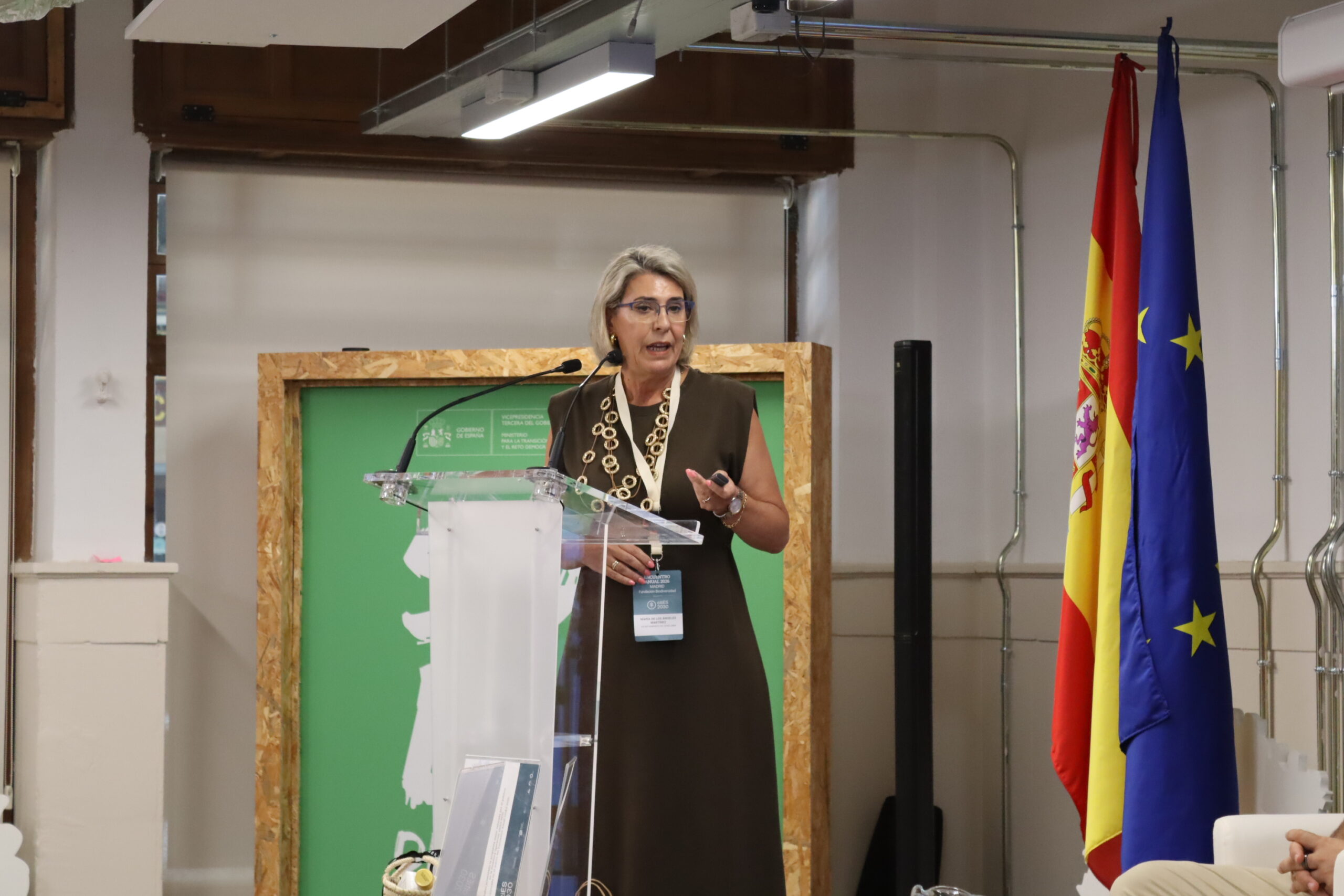
The initiative presented by Chiclana de la Frontera was recognized during the meeting with the award for the “Most Replicable Project.”
María de los Ángeles Martínez, a city council member, shared the story of the transformation of Arroyuelo Street, an example of how specific, local-scale initiatives can help prepare cities for climate change.
The proposal is based on a simple yet ambitious idea: if a single street can have a positive impact, then the combined effect of many initiatives working toward the same goal can help transform an entire city.
Arroyuelo Street, with more than 250 years of history, follows the course of an old stream that flowed into the sea. The project aims to restore that historical identity while redefining the priorities of public space. In contrast to a model centered on private vehicles—characterized by excessive heat, a lack of shade, narrow sidewalks, and aging infrastructure—the project advocates for a street designed for people, one that is more accessible and better suited to the climate.
The project is part of a broader strategy divided into two phases: the reclamation of public space and its adaptation through nature-based solutions and green infrastructure. Particularly noteworthy is the design of the shading system, which was conceived to address local climatic conditions, reduce the ambient temperature, and, at the same time, reflect Chiclana’s unique identity.
As María de los Ángeles pointed out during her remarks, a resilient city also “boosts the economy, fosters social harmony, and makes daily life more enjoyable,” transforming Arroyuelo Street “not only into a low-emission zone, but also a place that evokes positive emotions.”
Plan Regenera Madrid [Watch online]
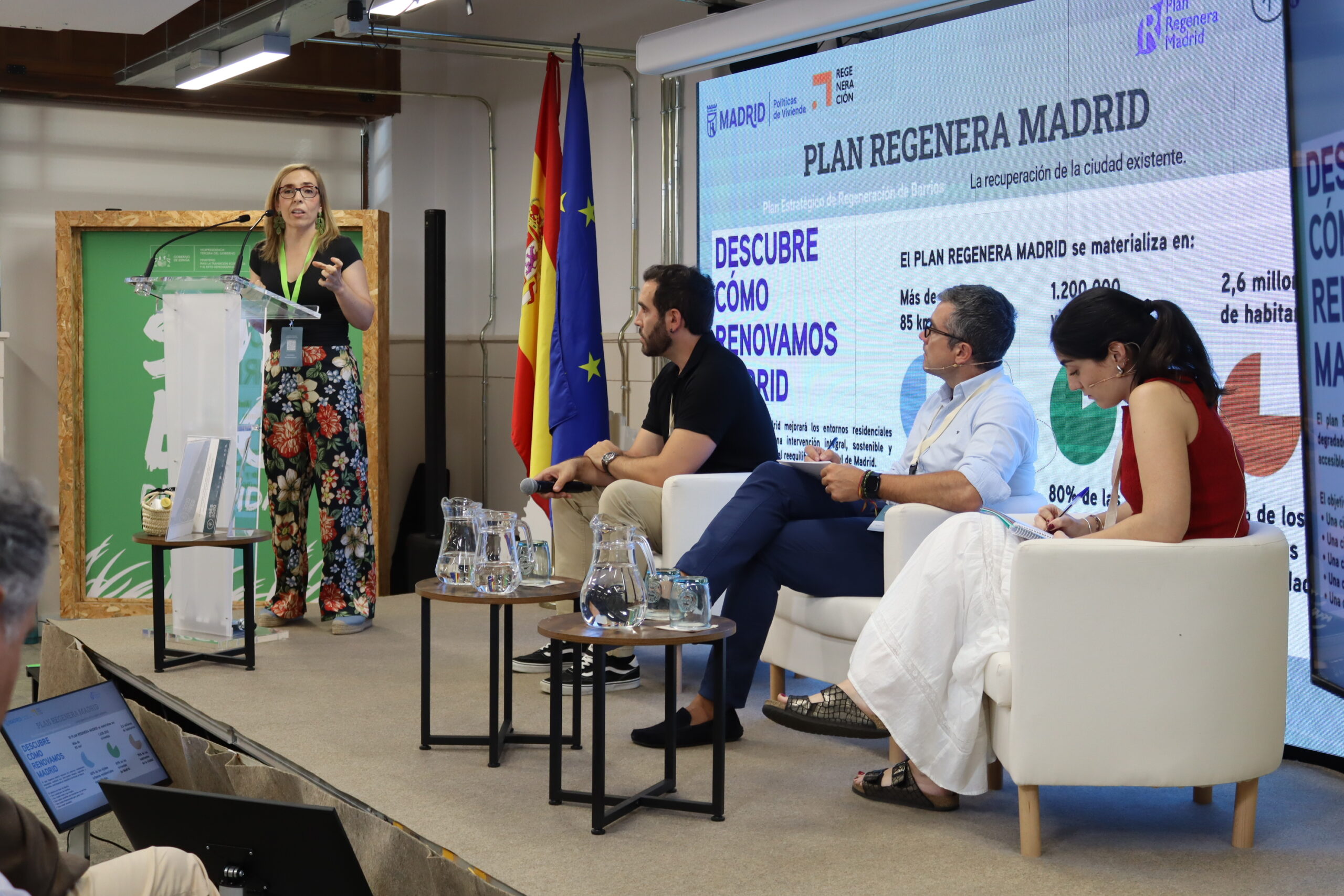 Itziar Bayón, technical advisor to the Subdirectorate General for Urban Transformation, presented the Regenera Madrid Plan, a strategic initiative aimed at regenerating vulnerable neighborhoods and improving the quality of life of their residents.
Although Madrid is currently promoting major urban transformation projects, the City Council is also committing to community-based initiatives through this plan, which focuses on outlying neighborhoods built before 1985. These are areas where a significant portion of the most vulnerable population resides and which, moreover, present significant challenges for intervention due to the complexity of land ownership.
The Regenera Madrid Plan is designed to cover an area of 85 km², affecting nearly 1.2 million homes and 2.6 million residents. Its approach is based on neighborhood-scale interventions, organizing the territory into regeneration units that allow for a response to the specific needs of each area through action plans and tailored urban planning measures.
Among the plan’s most innovative elements is the creation of a new land classification—General-Use Open Spaces (ELUG)—designed to facilitate projects in areas whose ownership cannot be determined as public land, thereby overcoming one of the main barriers that have historically hindered intervention in these environments.
The strategy is structured around three main pillars: strengthening social cohesion, improving accessibility and safety, and creating greener and more sustainable neighborhoods through renaturalization and climate adaptation efforts.
To determine priorities for action, the City Council analyzes indicators of social, economic, urban, and environmental vulnerability, including factors such as the socioeconomic conditions of the population, the characteristics of the housing stock, and the availability of vegetation and shade.
You can watch the video shared during the presentation at the following link and find more information about the Regenera Madrid Plan on its website.
- Video link: https://www.youtube.com/watch?v=dQFv8h3nL5Q
- Website link: https://transforma.madrid.es/
BRERA Project by the City of Soria [Watch live stream]
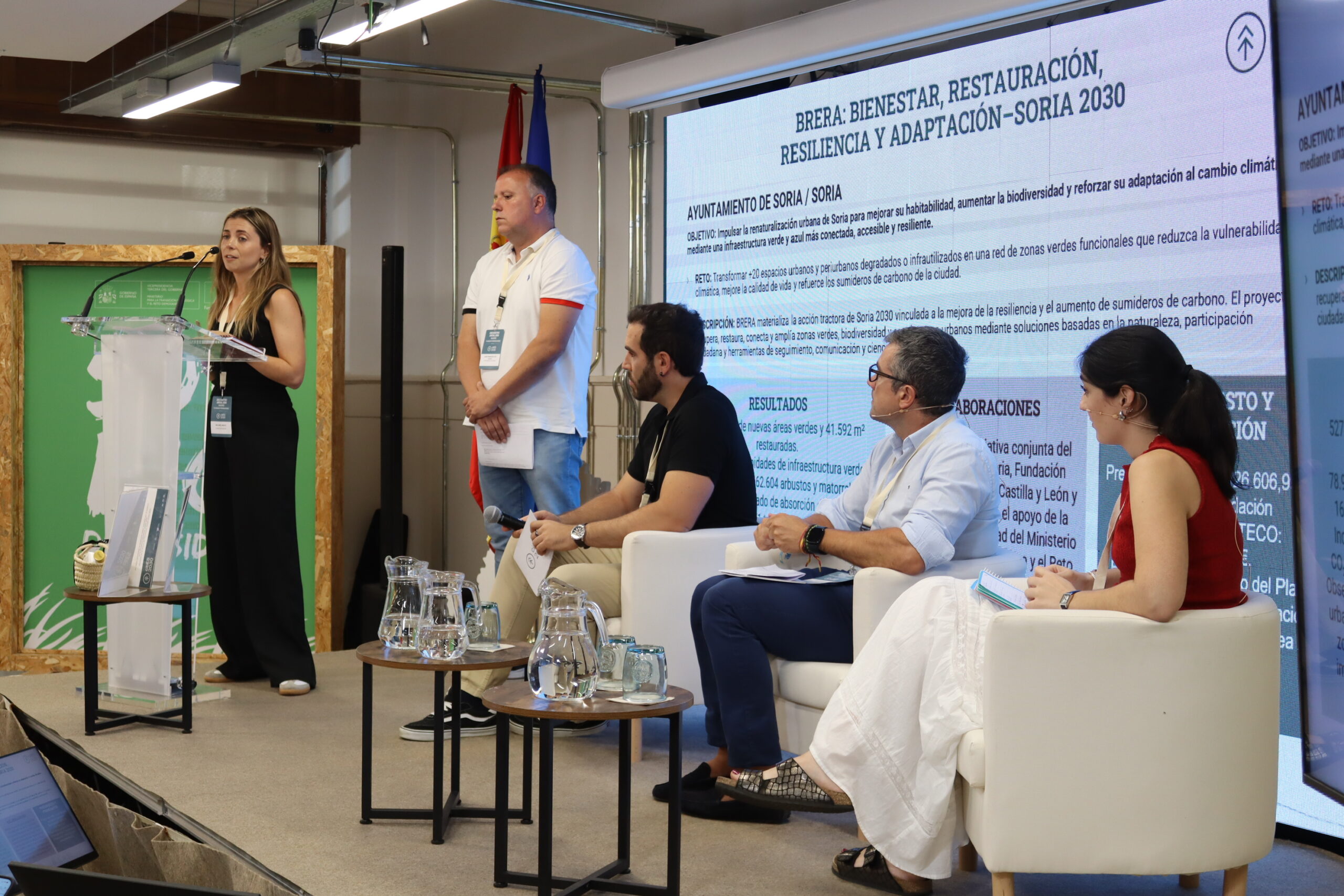
Juan Francisco de Lucas, from the City Council of Soria, and Melanie Amato, from the Cesefor Foundation, presented BRERA, an urban transformation project that views nature as essential infrastructure for building a more resilient, healthy city that is prepared to face the challenges of climate change.
Stemming from the Soria 2030 roadmap and funded by the Biodiversity Foundation with Next Generation EU funds, the initiative consists of 20 projects spread throughout the municipal area and aimed at creating a connected and functional green infrastructure network.
Among its key achievements are the creation of more than 527,000 m² of new green spaces, the restoration of 41,500 m² of degraded areas, and the planting of 16,300 trees and more than 62,000 shrubs, creating a green network that connects neighborhoods, the Duero River, and Mount Valonsadero.
The project makes it possible to capture approximately 147 metric tons of CO₂ per year, enhance biodiversity, and create healthier and more comfortable urban spaces for residents.
Beyond physical actions, BRERA incorporates a monitoring system to assess its long-term impact and encourages citizen participation through citizen science tools. As Melanie Amato pointed out during her presentation, “We only care for what we love, and we love what we know”.
Experience shows how nature can and should be managed as just another form of urban infrastructure, capable of generating lasting environmental, social, and climate benefits.
Click the link below to visit the project's website and access the viewer and download the citizen science app: https://www.soria2030.es/es/brera
Valencia Governance Model [Watch the livestream]
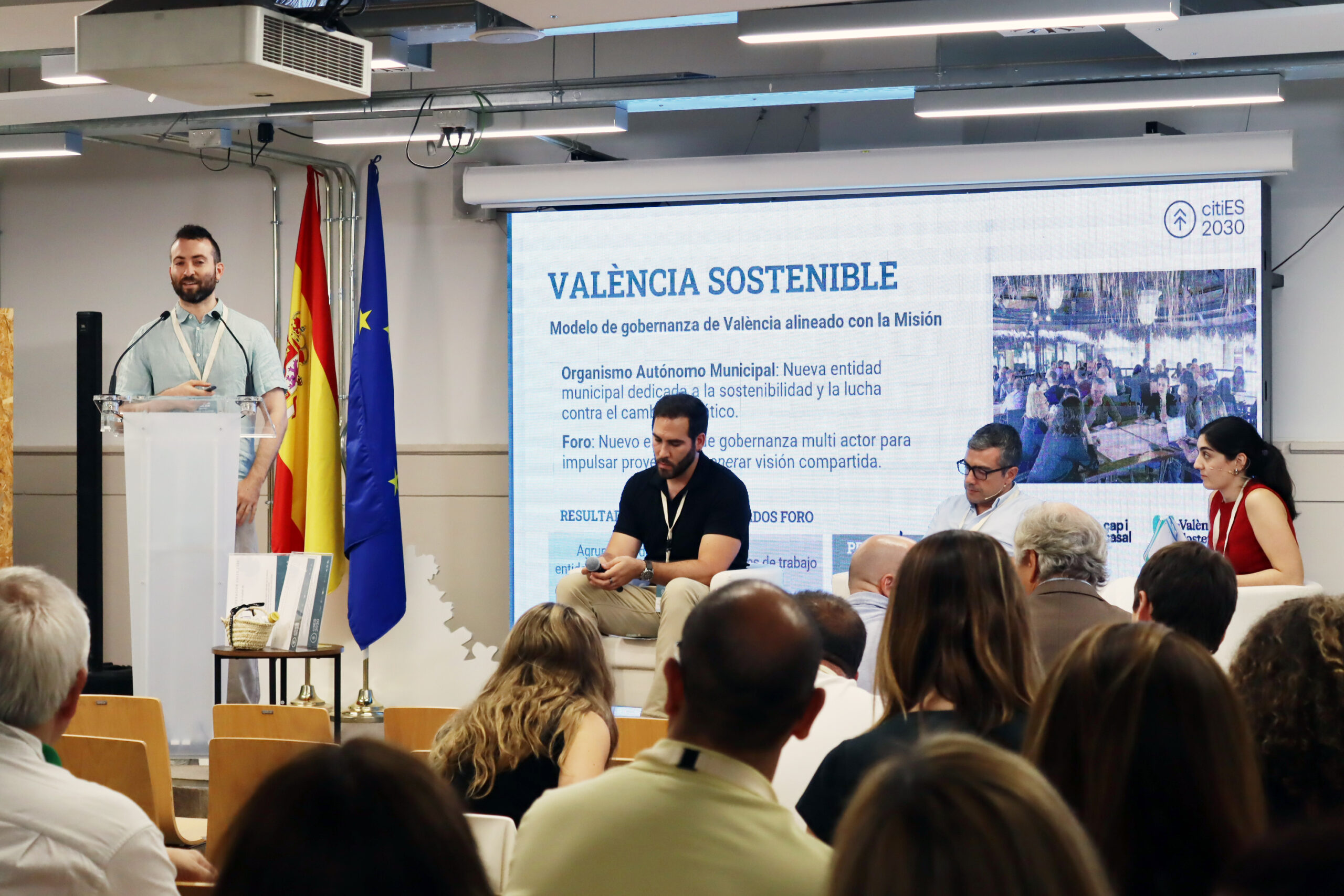
Alejandro Gómez, coordinator of European Projects and Urban Strategies at València Sostenible, shared two initiatives that reflect the evolution of the city’s governance model.
The first is the transformation of the former Fundació València Clima i Energia into the municipal entity València Sostenible, which was created through the integration of several organizations and is conceived as an agency for climate change and sustainability with greater authority and capacity for action.
The second initiative focuses on multilevel and multi-stakeholder governance through the València Sostenible Forum, a platform that brings together the city’s four sectors: public administration, the private sector, academia, and civil society. The forum is based on a clear premise: a city moves forward more quickly when its stakeholders know one another, collaborate, and share a common vision; however, such collaboration does not arise spontaneously and requires time, resources, and a specific structure to drive it forward.
Since its launch, the Valencia Sustainable Forum has held more than 15 sessions and counts on the active participation of more than 60 organizations. Through various working formats tailored to specific objectives, this initiative is helping to strengthen the local ecosystem of innovation and sustainability, generating synergies and aligning efforts to address the city’s climate challenges.
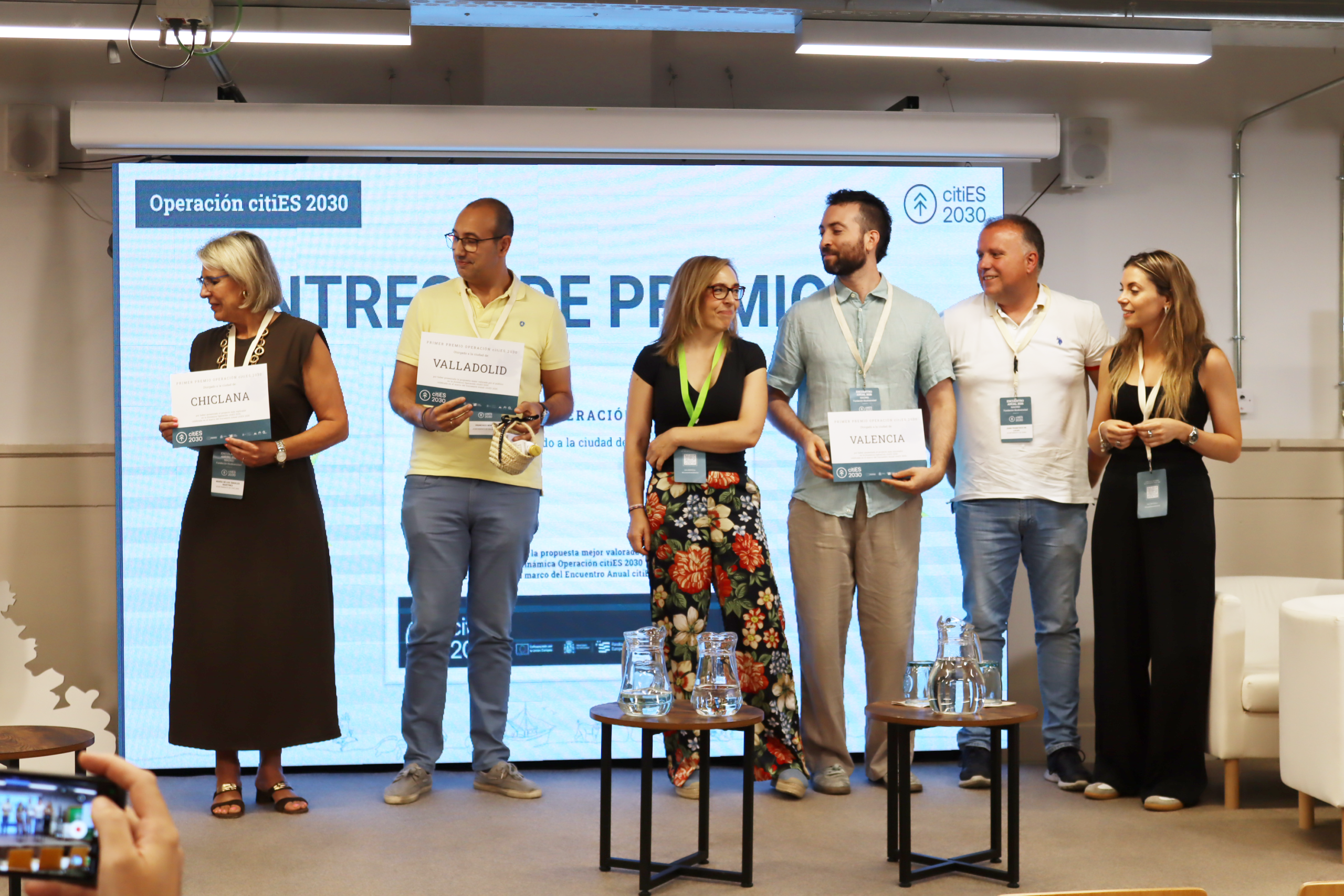
The initiative presented by Valencia was recognized with the award for “Most Innovative Project,” highlighting its commitment to new governance models to accelerate climate action.
Excitement Without Emissions in Valladolid [Watch the stream]
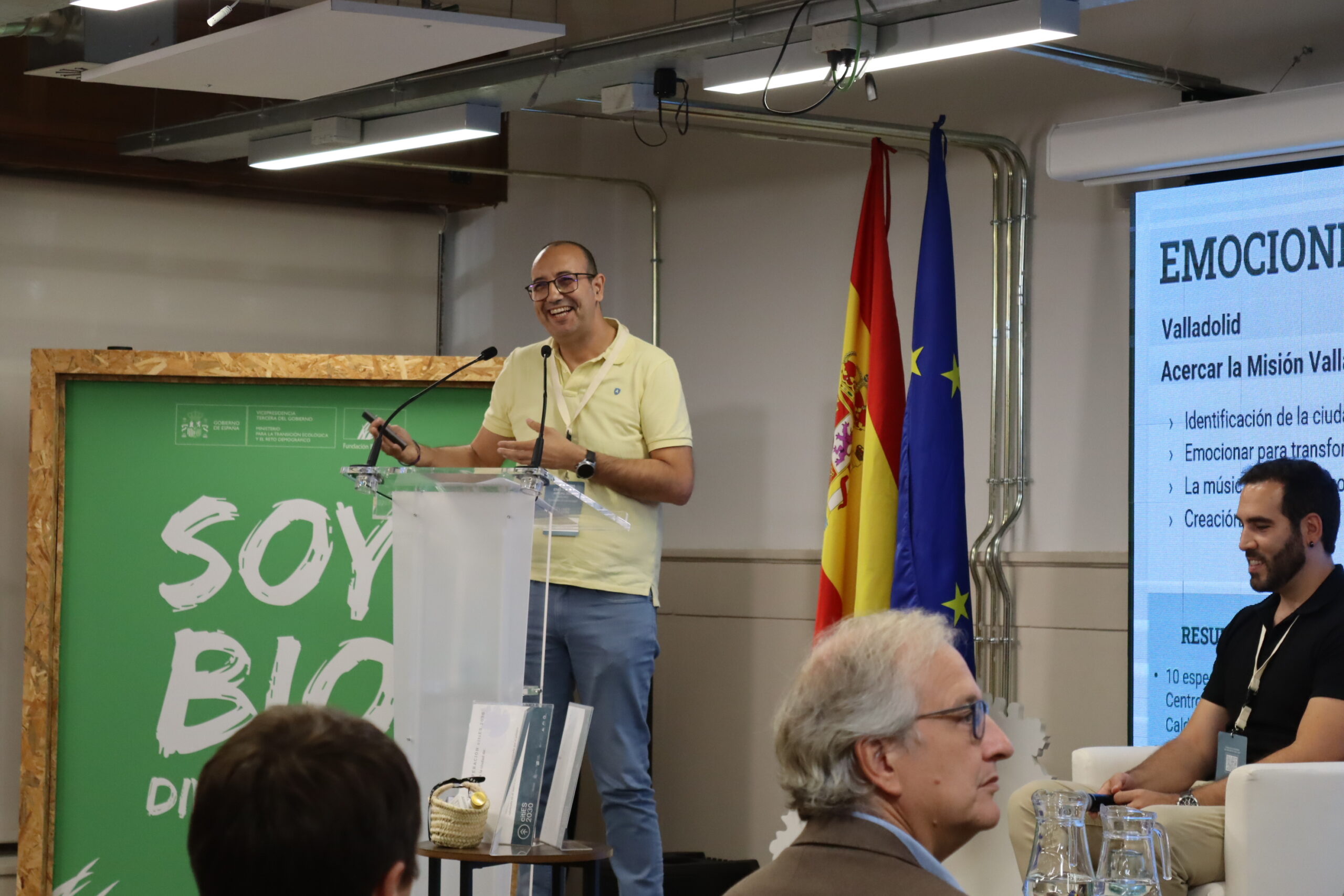
The “Emociones sin emisiones” initiative, presented by Francisco Benito, a European Projects Specialist at the Valladolid City Council’s Agency for Innovation and Economic Development, was recognized during the event with the award for “Best-Rated Project” of Operación citiES 2030.
The project is based on the idea that cities will not achieve climate neutrality solely through technical projects, but also by involving the people who live there.
The Mission Festivals, initiatives designed to connect climate action with people’s daily lives. The first one held was the Mission Festival of Humor and Magic, which brought a week of free performances by local and national comedians and magicians to civic centers in different neighborhoods across the city, drawing more than 5,000 attendees and taking the opportunity to invite participants to reflect on their personal contribution to the climate transition.
The second was the Misión Viviendo el Río Festival, which transformed the riverfront into a space for gathering, participation, and raising public awareness, while also serving as the venue for the inauguration of Plaza Ciudad Misión, a new space designed to bring climate action closer to the public.
As Francisco noted during his remarks, the path to climate neutrality is not possible if people do not feel that this change is their own and that they are participating in the transformation.