

Energy retrofitting of buildings and neighborhoods is one of the top priorities for achieving the 2030 climate goals. Under the title “Retrofit to Accelerate,” the first session of the second day focused on how to combine energy efficiency, climate change adaptation, and improvements in quality of life through coordinated action on the building stock.
Progress Update on the URBANEW Lab: Key Points and Challenges in Implementing the European Energy Efficiency Directive (EED) and the Requirement to Develop Heating and Cooling Plans [Watch the livestream]
The session began with a workshop focused on the URBANEW lab, featuring Jesús Ruiz, a specialist in the Residential and Buildings Department (IDAE); Mario Rodríguez, Director of Public Policy (ECODES); Joseba Aranzabal, an architect at ENSANCHE XXI; and Dolores Huera, Executive Director of the Green Building Council Spain (GBCe).
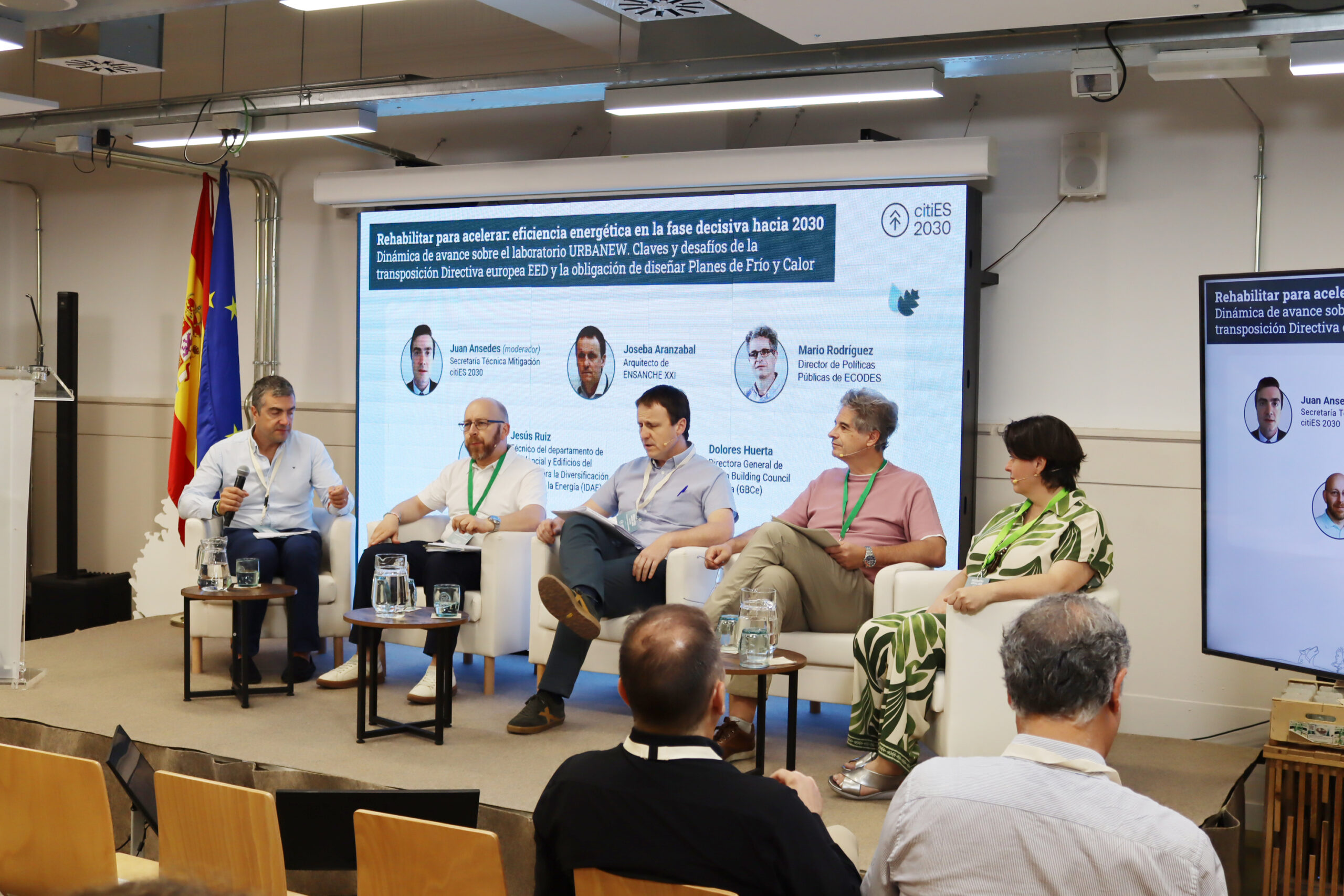
The debate centered on the transposition of the European Energy Efficiency Directive and the future requirement to develop Cooling and Heating Plans, highlighting the need to jointly address the energy retrofitting of buildings and the adaptation of cities to increasingly extreme temperatures.
Among the main conclusions, the importance of moving toward comprehensive rehabilitation was highlighted, moving beyond isolated actions and committing to coordinated interventions at the neighborhood level. The speakers agreed that the decarbonization of buildings must be accompanied by urban renaturalization measures, passive adaptation solutions, citizen participation, and financing models that also reach the most vulnerable households.
Likewise, the need to improve coordination among government agencies, streamline administrative processes, make better use of available data, and strengthen local offices that assist citizens during renovation processes was emphasized. Funding, the shortage of skilled labor, and the complexity of projects in homeowners’ associations were identified as some of the main challenges to accelerating the pace of transformation of the building stock.
Case Studies in Rehabilitation [Watch Online]
The second part of the session featured two case studies that illustrate how to put these principles into practice.
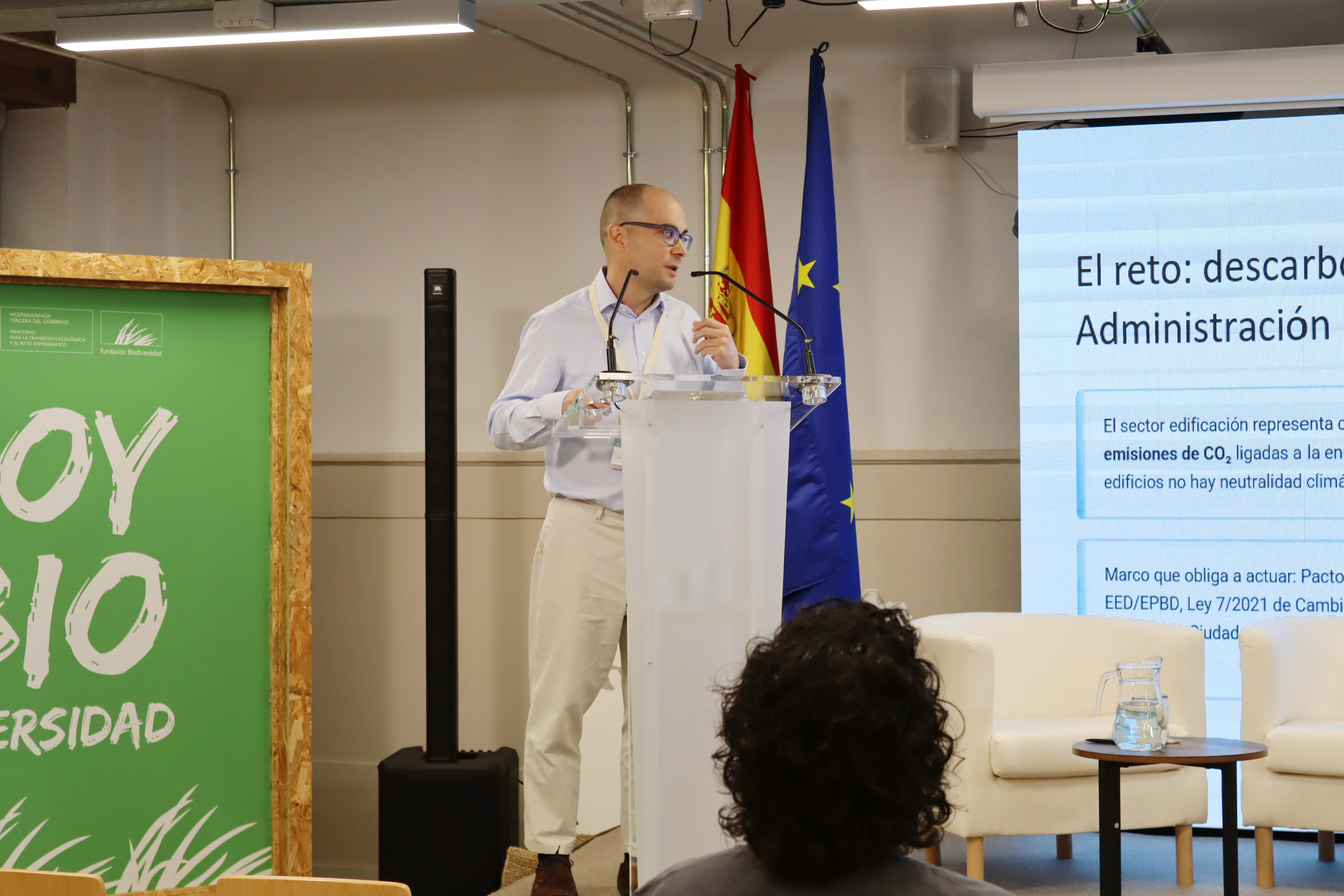
On the one hand, Ernesto Revilla, from the Defense Subdelegation in Castile and León, presented the energy-efficiency renovation of the Ministry of Defense headquarters in Valladolid.
The project demonstrates that even historic and highly protected buildings can make significant strides in energy efficiency through a strategy based on demand reduction, gradual electrification, performance monitoring, and continuous improvement. Furthermore, this experience is serving as a model for replication in other public administration buildings.
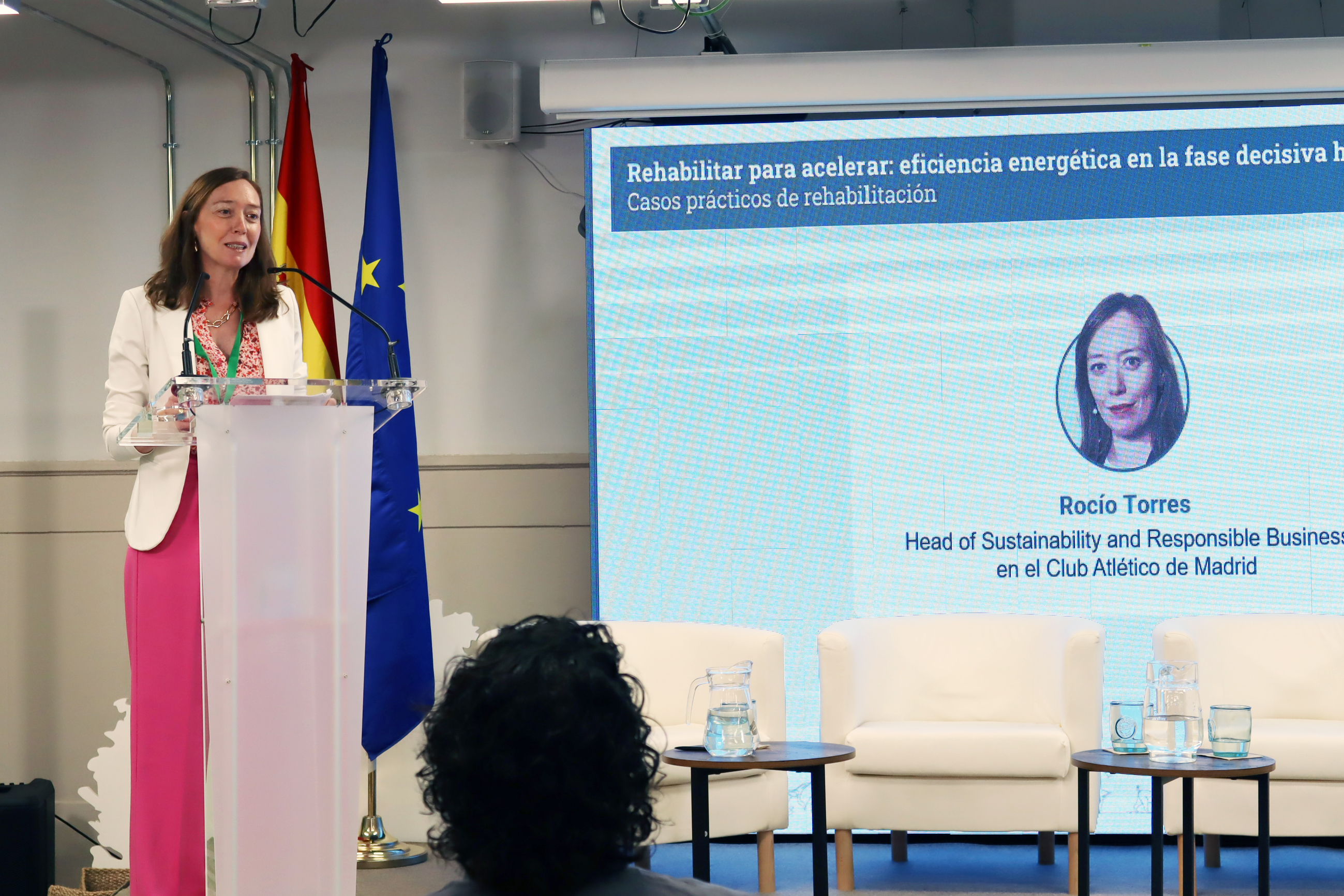
Meanwhile, Rocío Torres, head of sustainability at Club Atlético de Madrid, demonstrated how a major sports facility can contribute to the energy transition.
Notable measures include smart energy management, 100% LED lighting at the Riyadh Air Metropolitan Stadium, rainwater harvesting, the use of electricity from renewable sources, and the installation of photovoltaic systems and energy storage at the club’s other facilities. All of this is part of a roadmap aimed at achieving net-zero emissions by 2040.
The session concluded with an idea shared by all participants: retrofitting is not just about reducing energy consumption or emissions, but about building cities that are more comfortable, healthier, more resilient, and better prepared to face the climate challenges of the coming decades.
POWERPOINT DOWNLOADS: