

Reconstruction following extreme weather events and the need to adapt cities and regions to an increasingly complex environment were the focus of this session, which addressed climate resilience from two perspectives: regional land-use planning and urban reconstruction following the DANA.
Climate Adaptation as a Cornerstone of Territorial and Urban Planning [Watch the livestream]
The first part of the discussion brought together Juan Carlos Abascal, Deputy Minister of Territorial Planning and Urban Agenda for the Basque Government, and Marc Vilahur, Director General of Environmental Policies for the Government of Catalonia. Both agreed that adaptation to climate changemust be structurally incorporated into territorial planning and urban policies, moving beyond sectoral approaches and committing to multilevel and cross-cutting governance.
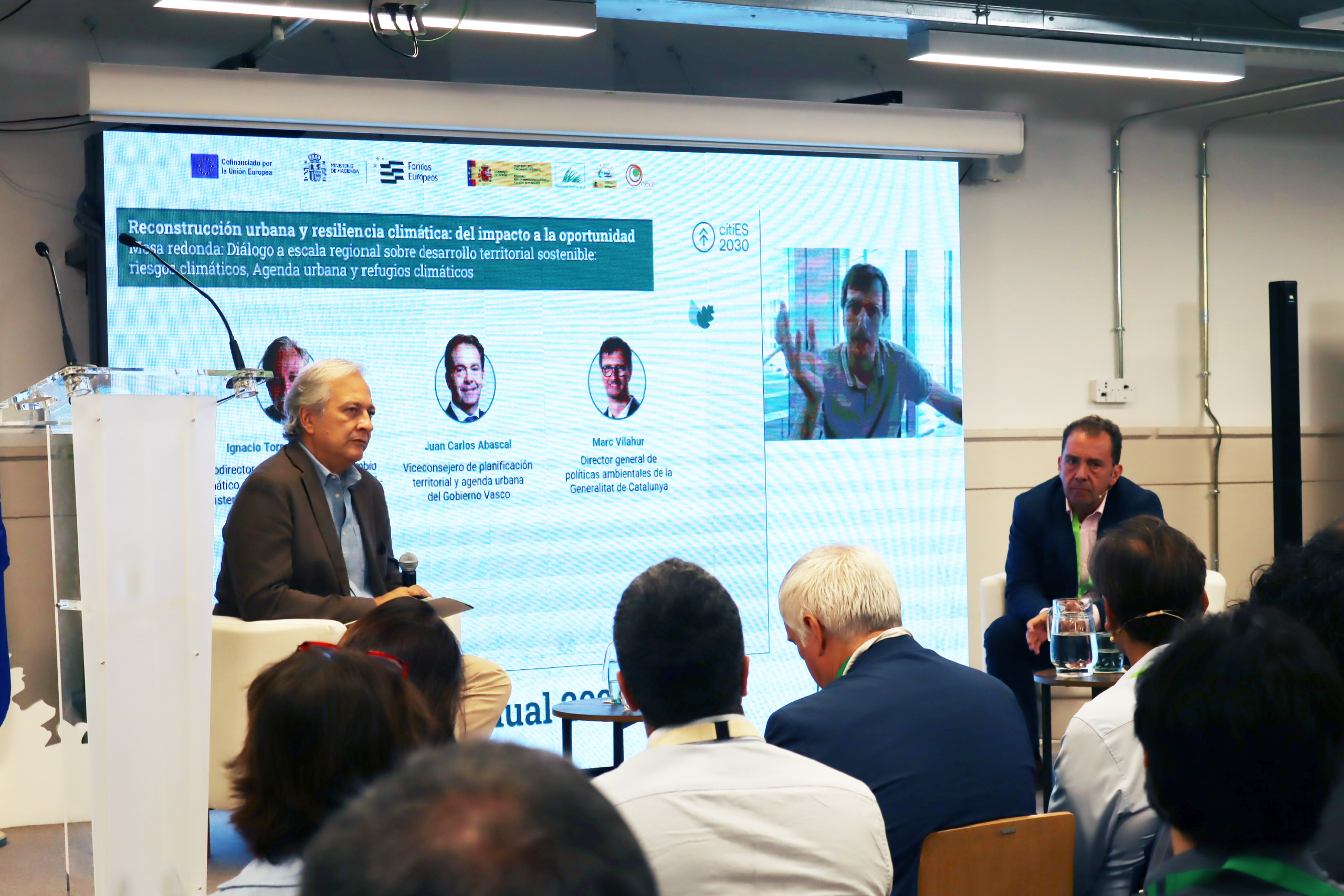
The Basque Government presented its experience in the integration of climate risks into land-use planning, highlighting the revision of its Land-Use Planning Guidelines and coastal planning based on sea-level rise scenarios. For its part, Catalonia outlined the challenges arising from prolonged droughts, rising temperatures, and the growing risk of high-intensity wildfires, as well as the adaptation measures implemented in protected natural areas, climate refuges, and international cooperation projects.
The session highlighted the importance of collaboration among government agencies, citizen participation, and the need to strengthen municipalities’ technical capacities to incorporate mitigation and adaptation criteria into urban planning. Participants also shared experiences related to the comprehensive regeneration of vulnerable neighborhoods, ecological restoration, cross-border coordination, and the development of tools to facilitate the implementation of renewable energy sources that are compatible with biodiversity conservation.
Post-DANA Reconstruction as an Opportunity for Transformation [Watch the livestream]
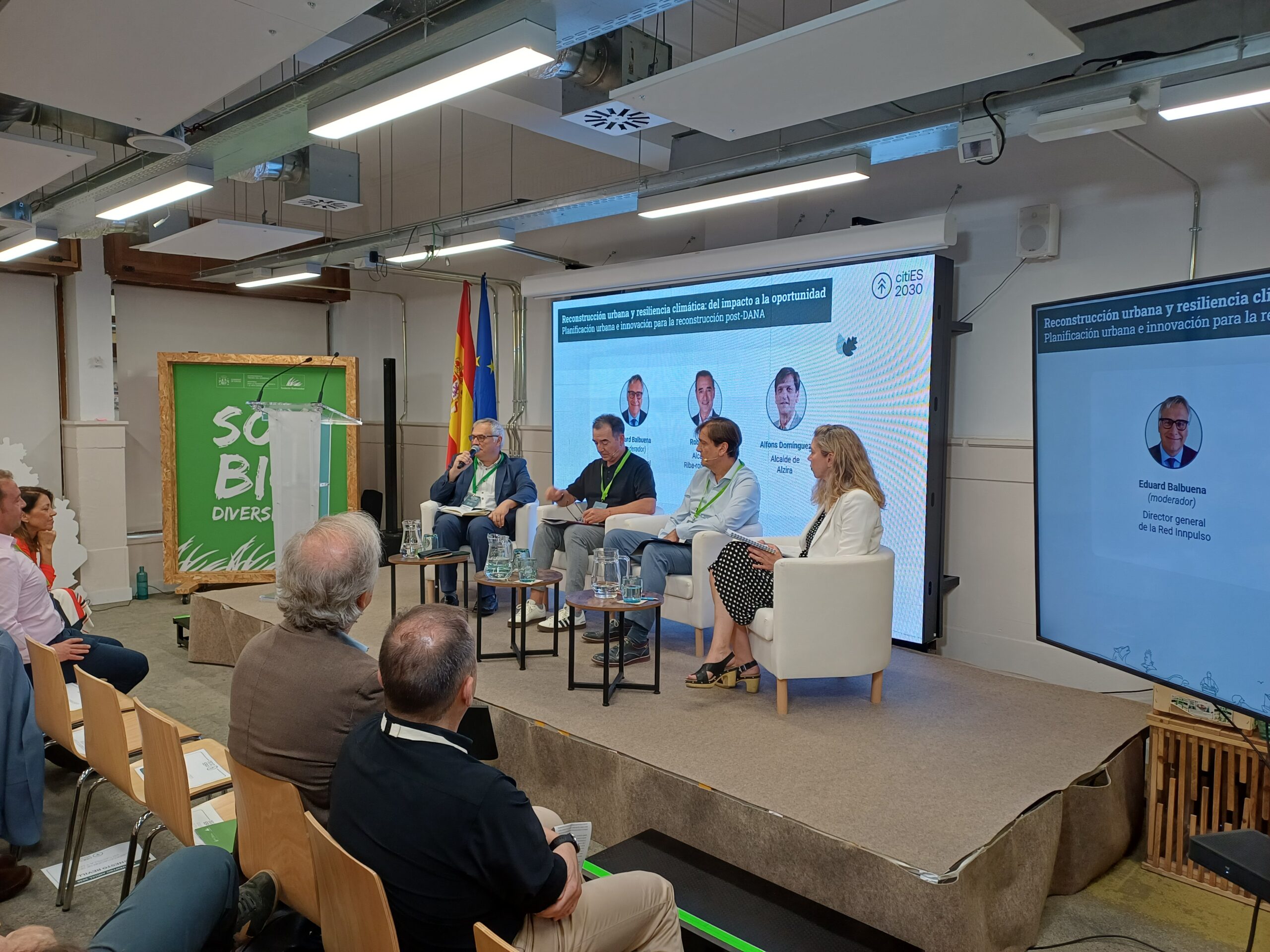
The second part of the session focused on the reconstruction efforts following the DANA from the perspective of innovation and learning. Moderated by Eduard Balbuena, executive director of the Innpulso Network, the panel included Robert Raga, mayor of Riba-roja de Túria; Alfons Domínguez, mayor of Alzira; and Elisa Rivera, director general of planning, coordination, and knowledge transfer at the Ministry of Science, Innovation, and Universities.
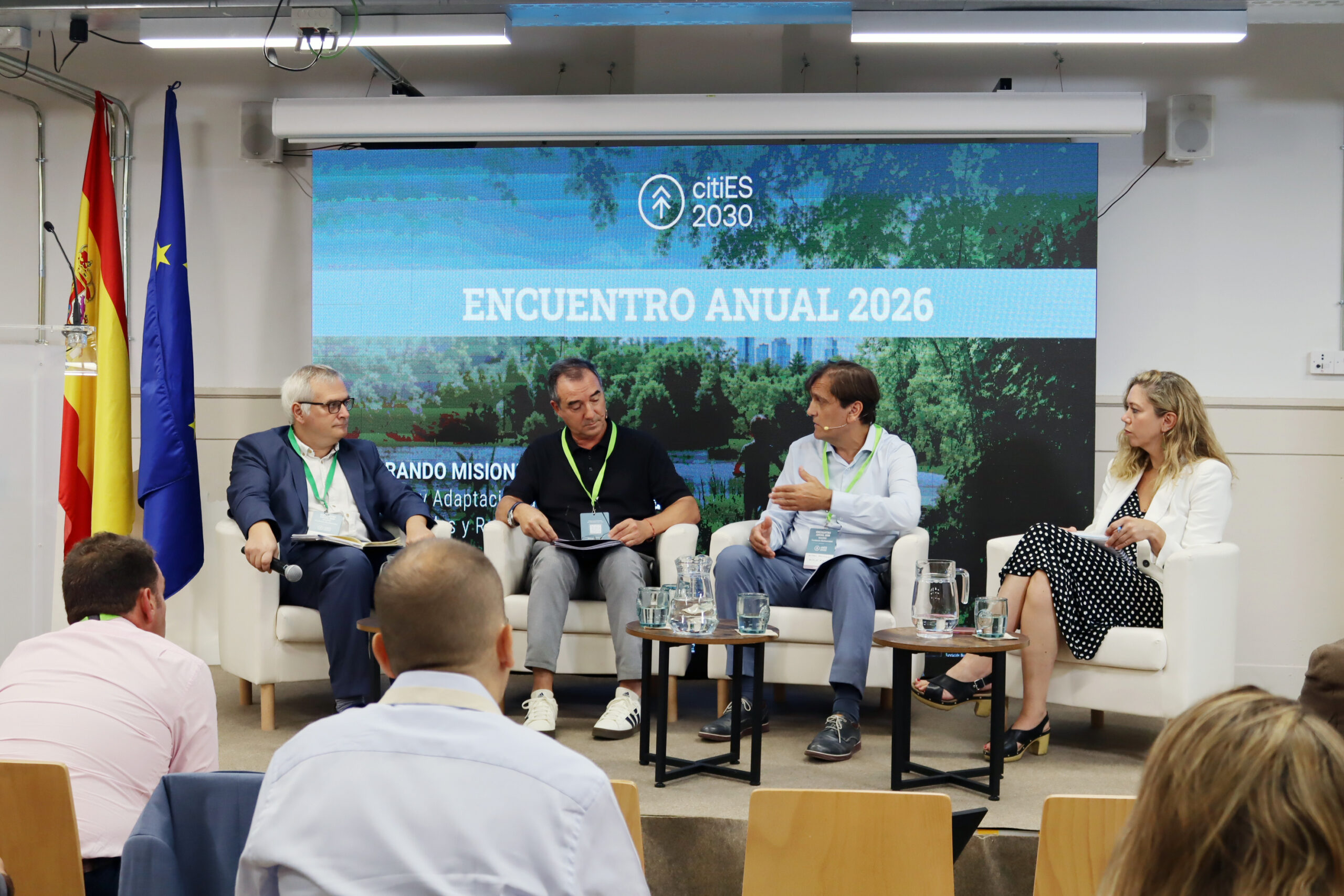
The speakers emphasized the need to use the reconstruction effort to transform the region and increase its future resilience, while avoiding the replication of vulnerable urban models. Among the main challenges identified were the revision of urban planning in flood-prone areas, the adaptation of infrastructure, integrated watershed management, the development of green and blue infrastructure, and the promotion of a culture of risk awareness among the public.
The mayors shared specific experiences from their municipalities, ranging from measures for flood management and improving urban permeability to initiatives aimed at educating and raising public awareness. They also emphasized the importance of public participation in transformation processes and the need for greater coordination among all the relevant government agencies.
For her part, Elisa Rivera presented the program launched by the Ministry of Science, Innovation, and Universities to support post-DANA reconstruction through collaboration among local governments, universities, and knowledge centers. The goal is for the reconstruction effort to be based on scientific evidence, the exchange of experiences, and the design of solutions that can be applied to other European regions exposed to similar climate risks.
The main conclusion of the session was that resilience is not built solely in the wake of an emergency, but rather through advance planning, collaborative governance, and a firm commitment to integrating scientific knowledge into decision-making.