CONAMA LOCAL 2025
Viladecans
December 2-3-4
Registration
Climate commitments of Spanish Mission Cities:
DECEMBER 3, 11:30 am - 2:00 pm
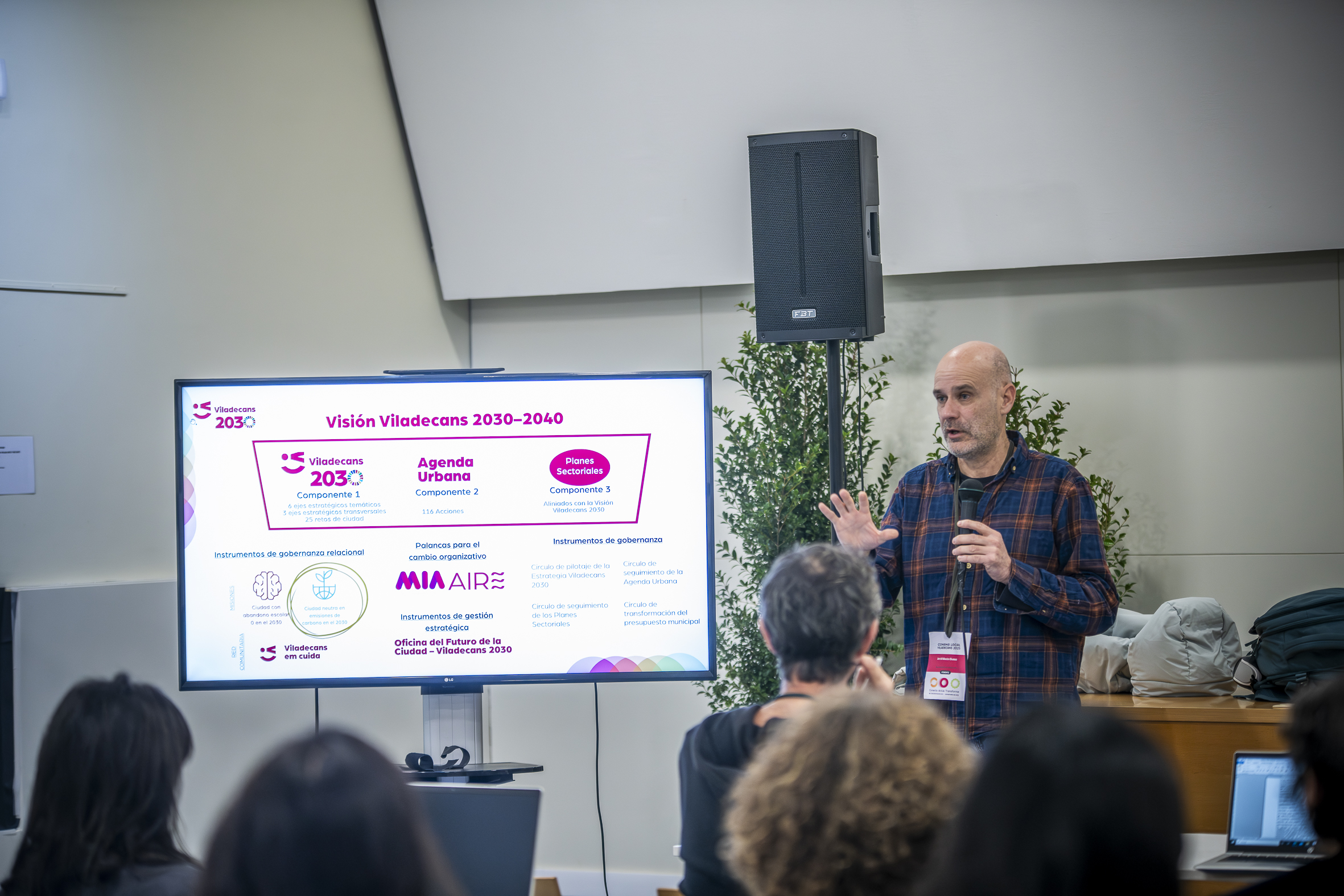
Spain has established itself as one of the leading countries in the European Mission Cities, an initiative that seeks to accelerate the transition to climate-neutral and more livable urban environments. But what does this mean for citizens? At this conference, organized by the citiES 2030 platform, we saw how this climate planning is being translated into specific projects that generate tangible progress.
The main focus was on the seven Spanish Mission Cities: Madrid, Barcelona, Valencia, Seville, Zaragoza, Valladolid, and Vitoria-Gasteiz. After intense technical work, these cities have updated their Climate Agreements. These are not just strategic documentsatégic, but city agreements that should help mobilize investment and align efforts. Their main approaches were analyzed, and pioneering initiatives in energy, mobility, and renaturalization that are already changing the streets of our cities and serving as replicable examples for other municipalities were highlighted.
At the same time, the session served as a stage for Bilbao and Viladecans present their new roadmaps. Both cities have formalized their ambition to join the Mission by drawing up their own Climate Agreements, contributing new visions and reinforcing the collective commitment of Spanish cities to decarbonization.
During the meeting, beyond the figures for emissions reduction, the following topics were discussed:
- Real solutions: What can we learn from the diversity of strategies applied in each territory and how to overcome common barriers??
- Legacy and future: How do these agreements lay the foundations for a solid city model, capable of enduring over time and offering a horizon of prosperity and well-being that transcends political cycles and consolidates beyond 2030?
During the meeting, cities reaffirmed their crucial role as drivers of climate transition and their commitment to accelerating transformations that improve citizens' quality of life and urban resilience.
Health Co-Benefits Indicators for Mission Cities
DECEMBER 3, 3:30-5:30 pm
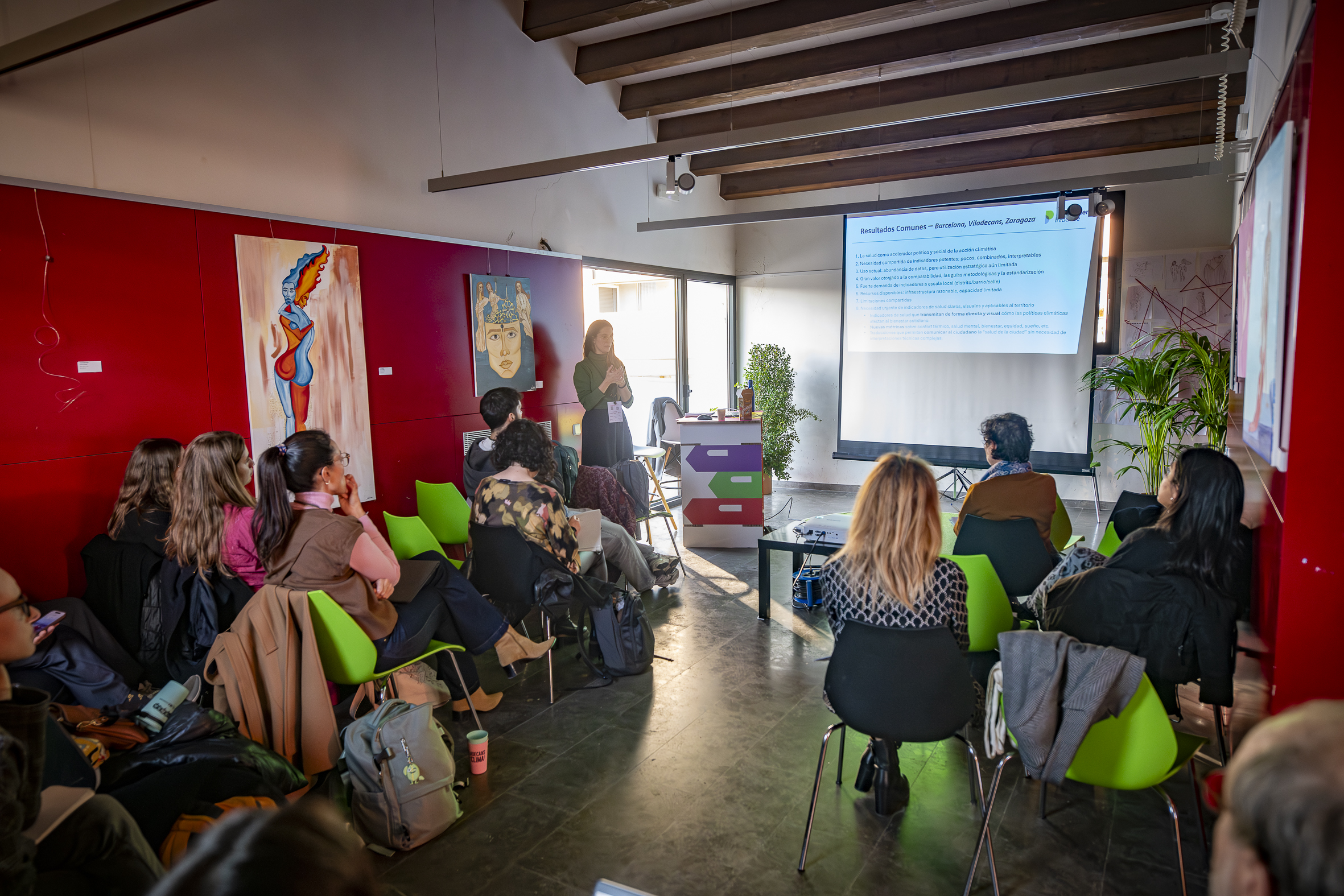
This workshop presented the proposal for 15 health co-benefit indicators developed within the framework of the Pathfinder project, along with a summary of the opportunities arising from communicating these co-benefits and the difficulties identified by cities.
The session combined an initial presentation with a space for dialogue and co-creation where participants could:
- Validate and prioritize the proposed indicators, according to actual data availability and usefulness for planning.
- Explore the potential of combined indicators as a tool for decision making.
- Discuss how to position health as a central political driver of climate action for the upcoming electoral cycles.
- Reflect on tools and next steps, including how to communicate these results within the Mission and what role the Pathfinder project can play in a simplified and shared monitoring, evaluation and learning (MEL) system among cities where health is a priority.
This workshop was a first step toward creating a community of practice around health co-benefits, stimulating political and technical interest, and moving toward a more useful, comparable measurement model geared toward urban transformation that puts health at the center of decision-making.
Looking to the future: how to activate the wave of neighborhood regeneration beyond grants. A laboratory to co-create flexible and accessible funding mechanisms for the city.
DECEMBER 3, 15:30 - 18:00 h.
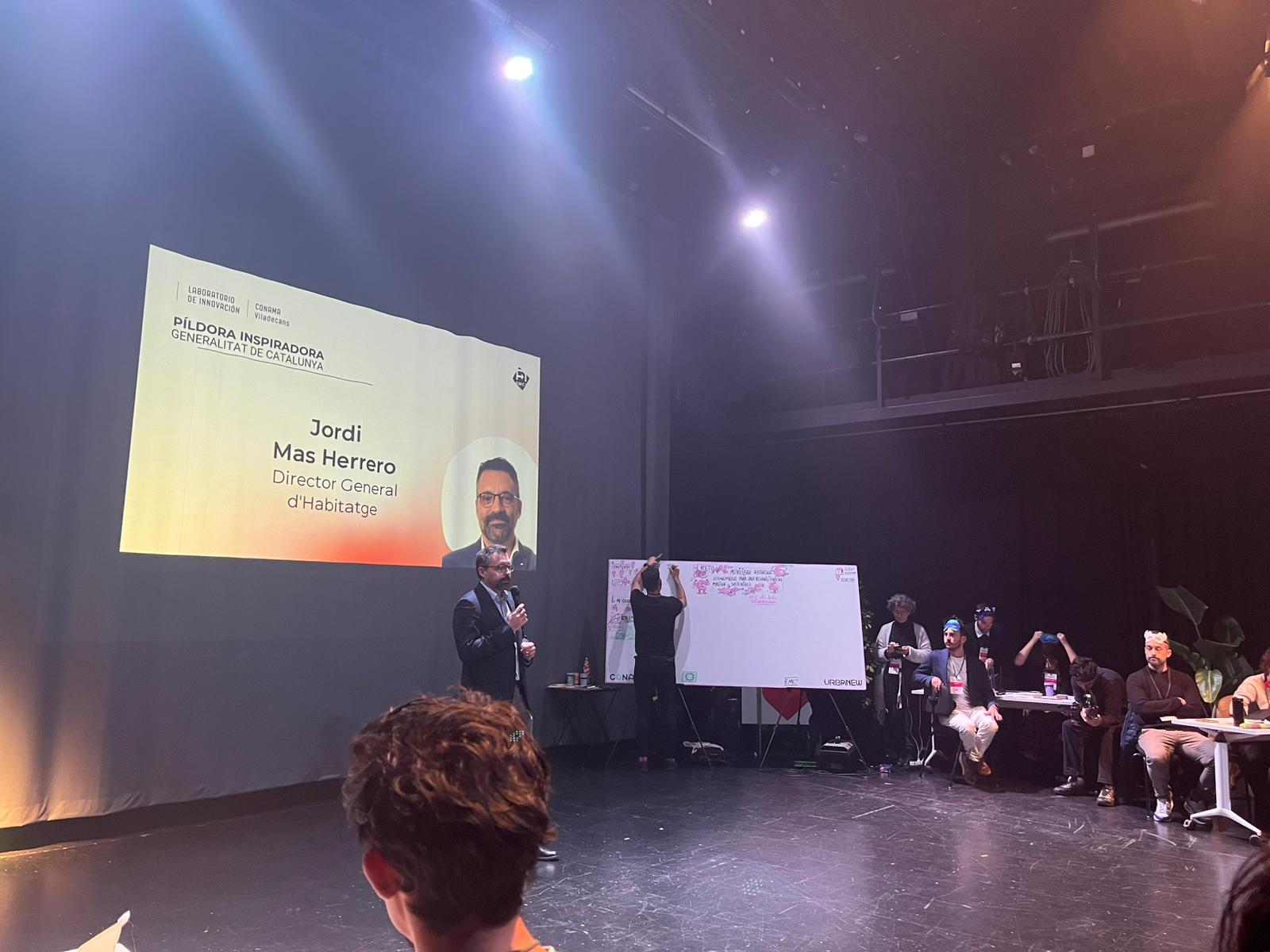
European cities are preparing for a new phase: moving from non-repayable grants or subsidies to a wave of massive, fair, and sustainable urban regeneration. In this context, the URBANEW EMC3project, the multi-city program within the Mission for Smart and Climate-Neutral Cities by 2030, led by the City Council of Vitoria-Gasteiz and bringing together the seven Spanish Mission Cities (Vitoria-Gasteiz, Barcelona, Madrid, Seville, Valencia, Valladolid, Zaragoza), came to CONAMA Local Viladecans to open a key conversation: How can we finance neighborhood rehabilitation beyond the subsidy model?
This laboratory proposed a collaborative workspace between local administrations, technical managers, urban planners, energy and renovation experts, and financial actors. New implementation structures for investment in energy renovation were explored, as well as innovative and realistic financing mechanisms that will enable local councils to promote energy renovation at the neighborhood level, ensuring its economic and social viability.
During the session, some solutions were outlined that will enable progress in urban regeneration. These will be analyzed by the URBANEW-EMC3 consortium to assess their potential implementation. In this context, one of the main conclusions was that cities must work to mobilize resources beyond grant management in order to implement large-scale urban regeneration models with a focus on job creation, just transition, and inclusivity.